
Wayne County Criminal History Checks
Begin with the record type, not with a broad request sent to every office. The North Carolina eCourts Portal is useful for public case leads, and the Wayne County clerk can confirm the official court file. The Sheriff holds its own arrest, booking, and custody material. A city police department holds the incident report it created. The North Carolina State Bureau of Investigation, or SBI, supplies a subject-only fingerprint review rather than a public name search. Each source answers a different question, so one result should not be treated as the whole Wayne County criminal history.
Gather the person’s full name, spelling variants, an approximate date, and a case, citation, booking, or incident number if known. A date of birth can help distinguish common names, though public views may limit personal identifiers. Then follow the source chain and save the exact case number shown by the first useful result.
- Search public Wayne County court leads by party name or record number in eCourts Portal.
- Filter to Wayne County and compare case type, filing date, status, and hearing details.
- Ask the Clerk of Superior Court to confirm the case file or provide a copy.
- Check the arresting agency or Wayne detention channel for incident, arrest, booking, or live custody facts.
- Use a certified clerk search or SBI Right to Review when that specific official product fits the need.
Wayne eCourts Case Search
The North Carolina eCourts Portal became Wayne County’s main public docket interface after the county moved to Enterprise Justice and Odyssey in April 2025. Public users can search without the elevated access reserved for attorneys and agencies. Results may show a summary, docket events, hearings, and some public document images. Uploads often appear within minutes, but processing volume can cause delay. The Judicial Branch warns that Portal is informational, is not the official record, and should not be used as a background-check product.
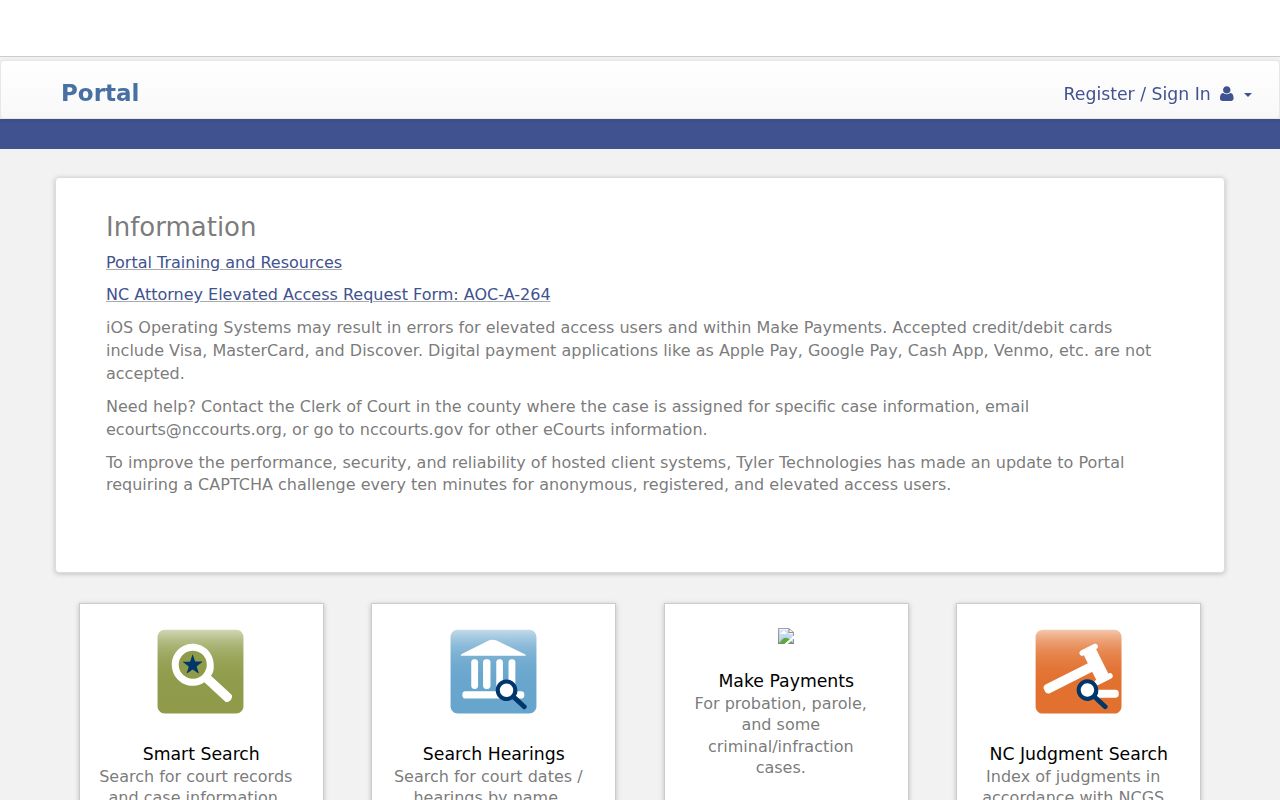
The pictured search screen is the broad lead-finding tool. County and record-number filters help turn a long statewide list into a useful Wayne County case trail.
| Search key | Required | Best use |
|---|---|---|
| Party name | No | Start with a person or organization, then refine common names. |
| Record or case number | No | Reach the most precise Wayne County file match. |
| Citation number | No | Trace a traffic or infraction matter. |
| Attorney or bar number | No | Find public case associations. |
| County | No | Select Wayne when the filter is offered. |
| Judicial officer or courtroom | No | Narrow a hearing and calendar search. |
Nickname, business-name, and cross-reference searches are also documented. A missing result does not prove that no older paper case, protected matter, police report, or SBI arrest cycle exists.
Official Background Checks in North Carolina
Wayne County offers two court-based routes through the Clerk of Superior Court. A public terminal search can cover county or statewide criminal court records without a fee for viewing or emailing a noncertified result, though print costs may apply. A certified name search uses form AOC-CR-314, costs $25, and covers only Wayne County court records. Mail submissions accept a money order or certified check, not a personal check. In-person payment may be made by cash, card, money order, or certified check.
The SBI background-check page explains the different state product. SBI does not offer the public a general name-search portal. Its Right to Review is for the subject of the record and uses fingerprints to find North Carolina arrest cycles for which SBI received a fingerprint card, with associated dispositions when available.
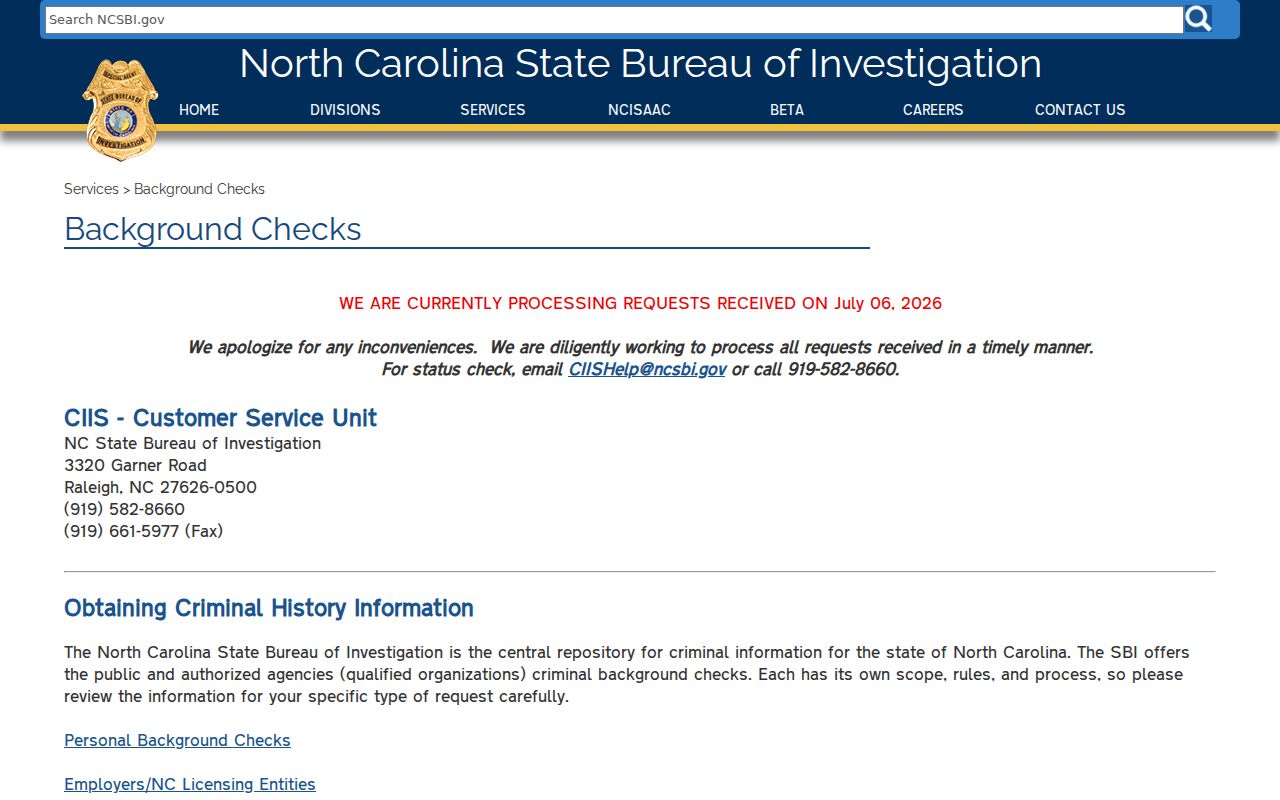
The state screen reinforces why a clerk search and an SBI review are not interchangeable. One follows court names; the other follows fingerprint-supported state history.
| Official option | Fee | Scope |
|---|---|---|
| Clerk terminal view | Free to view or email | Noncertified county or statewide court search |
| AOC-CR-314 | $25 | Certified Wayne County name search |
| SBI Right to Review | $14 | Subject-only North Carolina fingerprint history |
| Wayne Sheriff fingerprints | $15 from July 1, 2026 | Fingerprint card service; call before travel |
Wayne Fingerprint Record Review
SBI Right to Review requires a complete, legible ten-print card, the current request form, and a $14 certified check or money order sent by U.S. mail. SBI returns the record only to the subject by first-class mail. The form asks for full name, aliases or maiden names, address, birth details, sex, race, identifying data, signature, and fingerprint-card information. Poor prints or an incomplete card can be returned, which means new prints and another mailing step.
Wayne County Sheriff provides fingerprinting through its Civil/Courts operation at 207 E. Chestnut Street in Goldsboro. The published county fee becomes $15 on July 1, 2026, and fingerprint transactions are accepted Monday through Friday from 8 a.m. to 4 p.m. Call 919-731-1481 before making the trip. The SBI review excludes federal and out-of-state records, so someone checking a national self-record would use the FBI Identity History Summary process instead.
Kinds of Criminal Records
A Wayne County criminal record is not one universal file. Police, detention staff, courts, SBI, corrections officials, and registry staff create records at different stages. The creator controls both the content and the release rules. That division is why a court dismissal can appear at the clerk while an older arrest entry still lacks a matched disposition at SBI.
- Incident and arrest reports: the investigating Sheriff or police department records the event, arrest facts, and restricted working material.
- Booking records: Wayne detention staff record intake, identity, charges, bond, housing, and custody status.
- Court case files: the clerk keeps filed charges, events, pleas, outcomes, judgments, and public financial entries.
- SBI histories: fingerprint-supported North Carolina arrest cycles are paired with dispositions when SBI receives and matches them.
- Corrections and registry records: NCDAC tracks qualifying prison or supervision history, while the state registry displays fields made public by law.
Warrants follow their own route. The magistrate or court issues the process, while the serving agency handles enforcement. Anyone who thinks an active warrant may exist should contact the clerk, magistrate, or law-enforcement agency directly and should not rely on a general name search.
Wayne County Booking Records
Current county custody can be checked through Wayne County Sheriff Inmate Inquiry or by calling the detention line at 919-731-1660. The free search accepts a name, subject number, booking number, an In Custody choice, booking-from and booking-to dates, and a housing-facility filter. No login is stated. If a person has moved to state custody or community supervision, the North Carolina Public Offender Search is the better next stop.
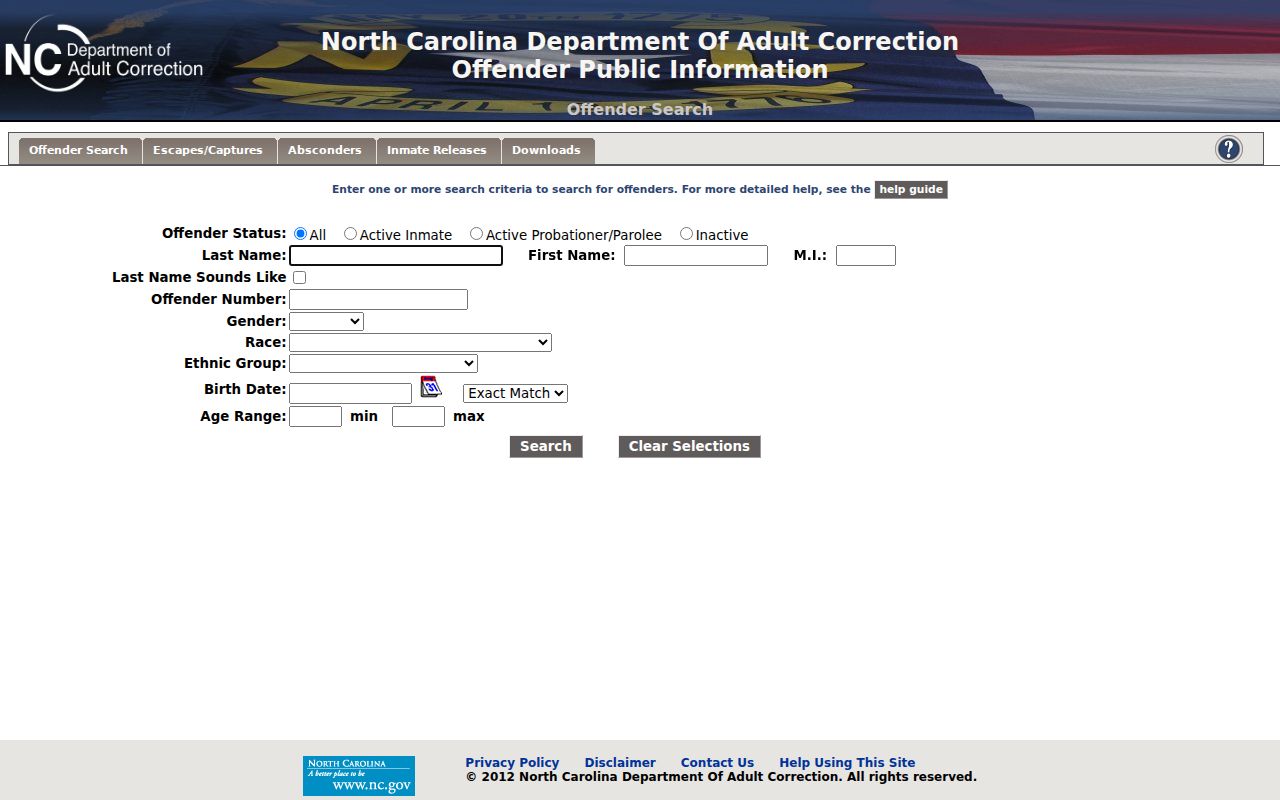
The state locator supplements, but does not replace, Wayne County booking data. It covers NCDAC custody and supervision rather than every local jail stay.
Custody geography changed in June 2025 when the new Wayne County Detention Center opened beside and connected to the Carey A. Winders Detention Center. Together they have a capacity of 441. The public entrance for detention and the magistrate is at 200 Stronach Avenue in Goldsboro, while Sheriff administration remains at 207 E. Chestnut Street. The official detention page shows the local facility and contact route.
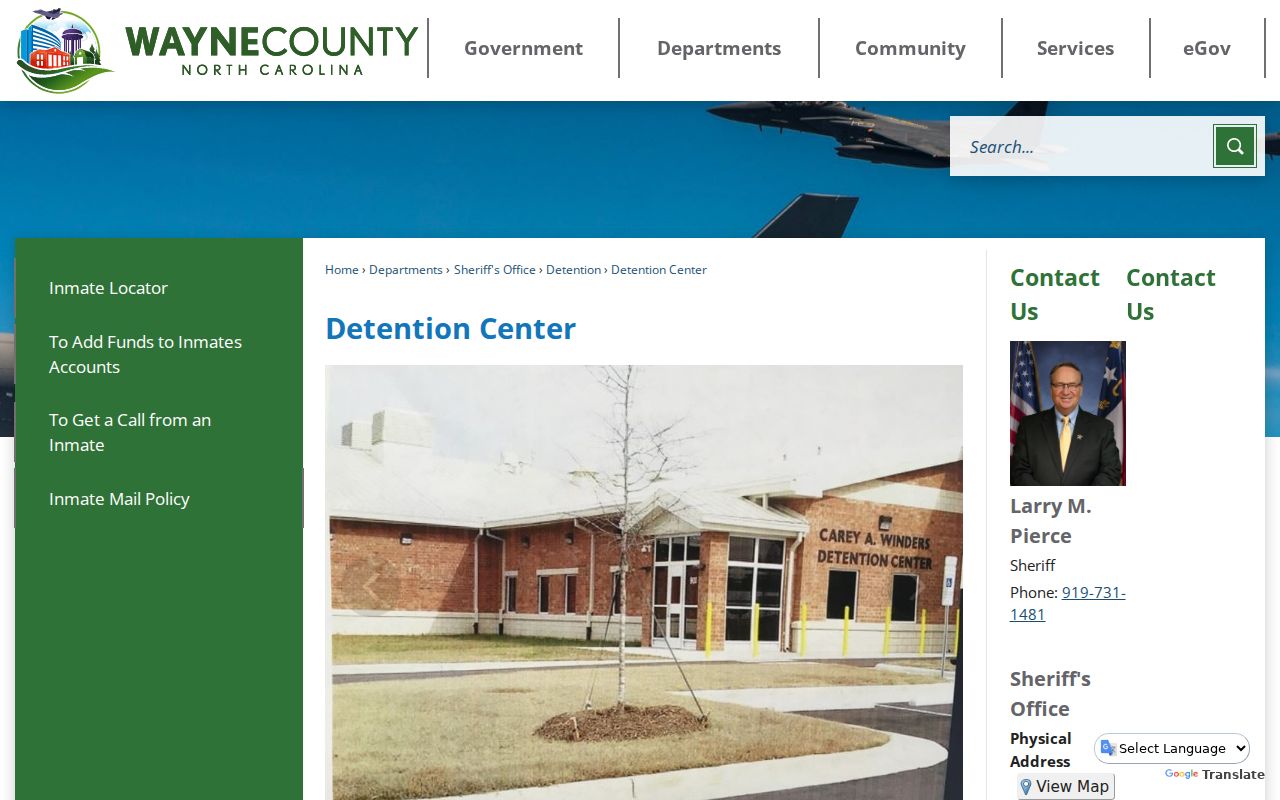
That split between Stronach Avenue and Chestnut Street matters: live custody and magistration questions go to the detention complex, while general Sheriff administration uses the older office address.
Wayne County Criminal Records: What They Contain
The fields depend on the source. An eCourts file can show court location, filing date, status, parties, filed charges, statute or offense code, hearings, docket events, public documents, disposition, judgment, costs, and counsel. A Wayne County booking entry instead focuses on intake and present custody. SBI uses identity and fingerprint links to organize arrest cycles. Reading the source label first prevents a bond entry or pending charge from being mistaken for proof of guilt.
| Name and identifiers | Names, aliases, record numbers, and limited identifying data used to distinguish records. |
|---|---|
| Arrest and booking | Arrest date, agency, booking number, facility, submitted charges, bond, and current status when public. |
| Charges and statutes | Filed offense text, code citation, class or level, and charge sequence. |
| Disposition | Dismissal, acquittal, plea, conviction, or another recorded outcome for each count. |
| Sentence | Judgment, confinement, supervision, costs, and other public terms ordered by the court. |
| Custody or supervision | County custody, NCDAC incarceration, probation, parole, or post-release data held by the proper agency. |
Confidential personal identifiers, sealed or expunged cases, juvenile material, victim-sensitive facts, and protected documents do not appear in ordinary public results. Public document images also vary by case.
Correcting Wayne Criminal Records
When two Wayne County records disagree, compare the arrest cycle with the court’s final disposition. Filed charges can differ from arrest charges, and a case outcome may not yet be matched to SBI’s fingerprint entry. Start with the clerk’s official case file. Ask for a certified disposition if SBI needs proof of the outcome, then follow the challenge or update channel described with the SBI record.
A missing Portal result requires a different check. Ask the Wayne County clerk about an older paper file, confirm spelling and case number, and contact the arresting agency for its incident or arrest report. Portal omissions can also reflect legal restrictions rather than an error. Sealed, expunged, confidential juvenile, and protected records are not restored to public view merely because a requester knows they once existed.
Note: An arrest entry, a pending charge, and a conviction are three different facts and should never be read as synonyms.
North Carolina Public Access Laws
North Carolina Public Records Law begins with broad inspection and copy rights, but criminal records carry important limits. Court access follows Judicial Branch rules and case-specific confidentiality law. Law-enforcement agencies may release listed arrest and incident facts while keeping investigative intelligence, evidence, victim-sensitive details, and material whose release could harm safety, an investigation, or a fair trial.
Key statutes:
G.S. 132-1 and 132-6 define public records and allow inspection and copies at reasonable times under reasonable supervision.
G.S. 132-1.4 separates public arrest and incident facts from generally protected criminal-investigation records.
Chapter 15A, Article 5 sets distinct eligibility and procedure rules for North Carolina expunctions.
Chapter 14, Article 27A controls sex-offender registration, public fields, verification duties, and lawful access.
G.S. 132-6.2 also permits actual copy cost and a special service charge for extensive use of staff or technology. The amount and process depend on the office and request.
Routing Wayne County Record Requests
A common local mistake is sending a criminal court request through the general Wayne County web form. The county routing page expressly sends criminal, civil, and traffic court records to the Clerk of Superior Court. It directs county administrative requests elsewhere. An arrest or incident report should go to the law-enforcement agency that created it, while a custody record belongs with the Sheriff or detention center.
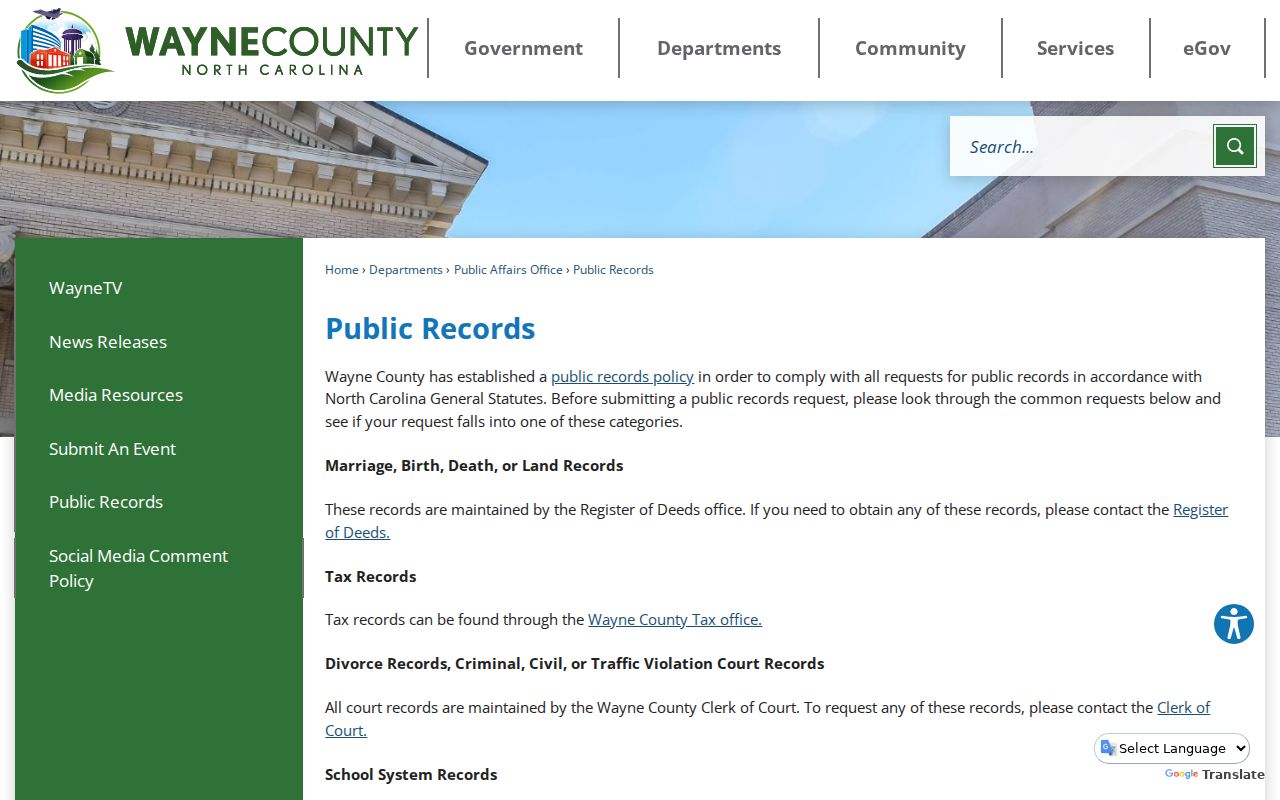
The routing notice can save a failed request. It also shows why one broad county form cannot replace the clerk, police, Sheriff, and detention channels.
The Wayne County administrative request form asks for contact details, a complete record description, title and date if known, department, and delivery choice. Email delivery is listed without a copy charge; paper is $0.25 per page. Extensive requests may bring a service charge after the county supplies an estimate and lets the requester decide whether to pay.
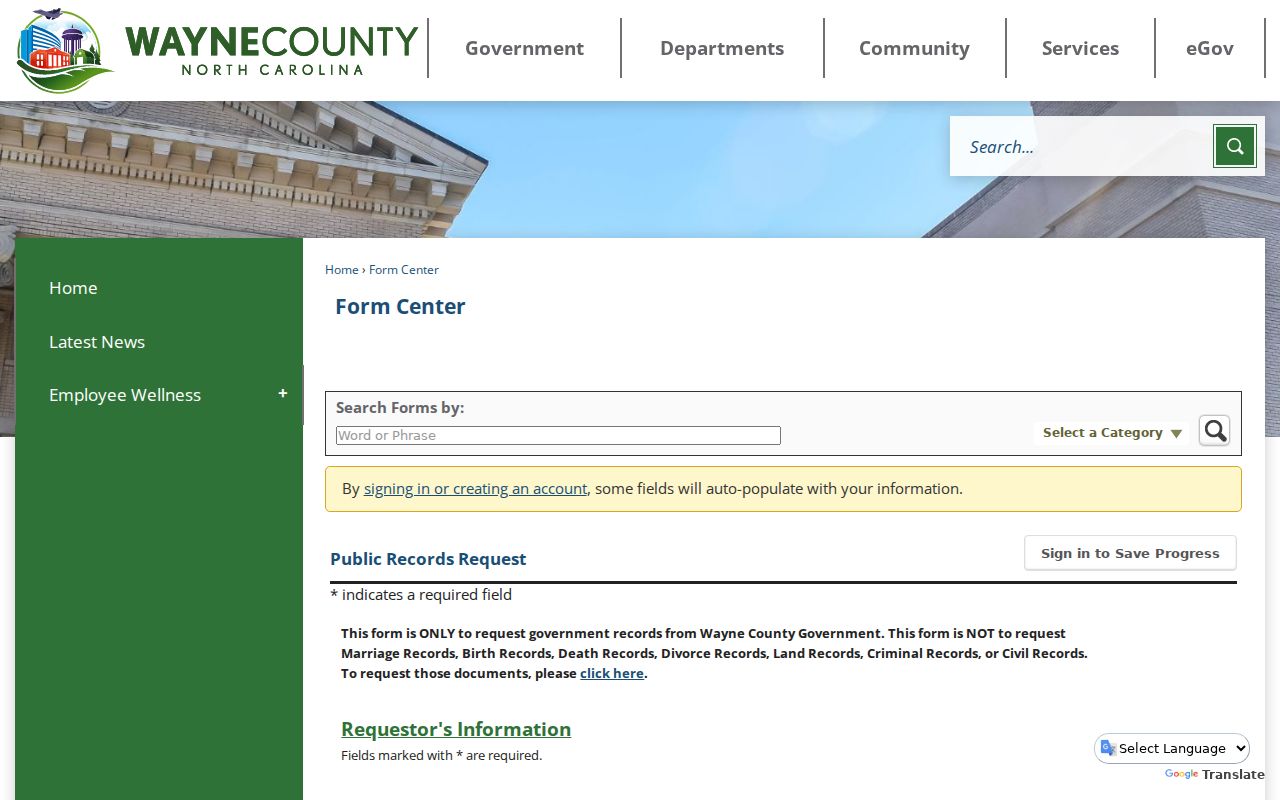
This form is useful only after confirming that Wayne County Government, rather than the clerk or an arresting agency, holds the requested item.
Restricted, Sealed & Expunged Records
North Carolina uses the term expunction. Chapter 15A, Article 5 contains several routes with different rules for disposition, offense, age, prior history, and waiting periods. G.S. 15A-146 addresses certain dismissals and not-guilty outcomes, including qualifying automatic processes. Other provisions in the 15A-145 series cover specific convictions and circumstances. No single fee or waiting period applies to every petition.
A Wayne County petition is filed with the clerk for the county where the case arose, using the current AOC form tied to the correct statute. Some dismissal-based relief has no filing fee, while some conviction petitions carry a statutory charge. Once an order is entered, recordholding agencies receive it, but connected databases and cached copies may update at different times. A later check of both the clerk file and an SBI Right to Review can help confirm processing.
Juvenile, sealed, expunged, and otherwise confidential material remains outside ordinary public Portal and terminal results. A state expunction also should not be assumed to end a registry duty or remove a federal record.
Wayne County Recovery Court Records
Wayne Adult Accountability and Recovery Court is a named local program for qualifying nonviolent repeat participants with substance-use or co-occurring disorders. It generally focuses on lower-level H or I felony cases and intermediate-punishment matters. The district began referrals in December 2022 after federal and state funding, and the current published contact is 919-722-6251. Participation does not erase the need to read the underlying Wayne County court file, but the program can shape events, supervision, and the path to disposition.
Older announcements called the area Judicial District 8, while the current Wayne County court page uses District 9 after redistricting. That change is a useful record-search lesson: use today’s court directory for office labels, but keep the case number and filing county when reading older news or documents.
Wayne Criminal Record Geography
Wayne County’s record system has moved with its courts. The county was founded in 1779, and its first court met at Josiah Sasser’s home. Waynesborough formed around a courthouse in 1787. Legislation in 1845 and 1847 moved the county seat and courthouse function to Goldsboro after a vote. Today, the clerk’s court files are centered at 224 E. Walnut Street, while Sheriff administration and the newer detention entrance occupy separate nearby locations.
The official Wayne County government directory is a practical starting point for confirming which local department exists and where it is based.
The directory view supports the main rule for local searches: court, police, jail, and county administrative records sit with different custodians even when their offices are only blocks apart.
City-by-City Criminal Records in Wayne County
Goldsboro, Mount Olive, and Fremont are the top three incorporated places in Wayne County by the official population ranking used for these city guides. Their police departments create local incident and arrest reports, but North Carolina has no separate city court system. Charges move into Wayne County District or Superior Court, and county detention handles current custody. Each city has a distinct request path, so a report search should begin with the city that created it.
Goldsboro Record Check
Goldsboro Police has a records office, public request form, crash channel, and preliminary incident map.
Mount Olive Record Check
Mount Olive Police and the Town Clerk provide local report and request routes, with eCrash for collisions.
Fremont Record Check
Fremont Police accepts direct inquiries, with the Town office serving as a records-request fallback.
The North Carolina Sex Offender and Public Protection Registry adds a statewide search layer for all three Wayne County communities.
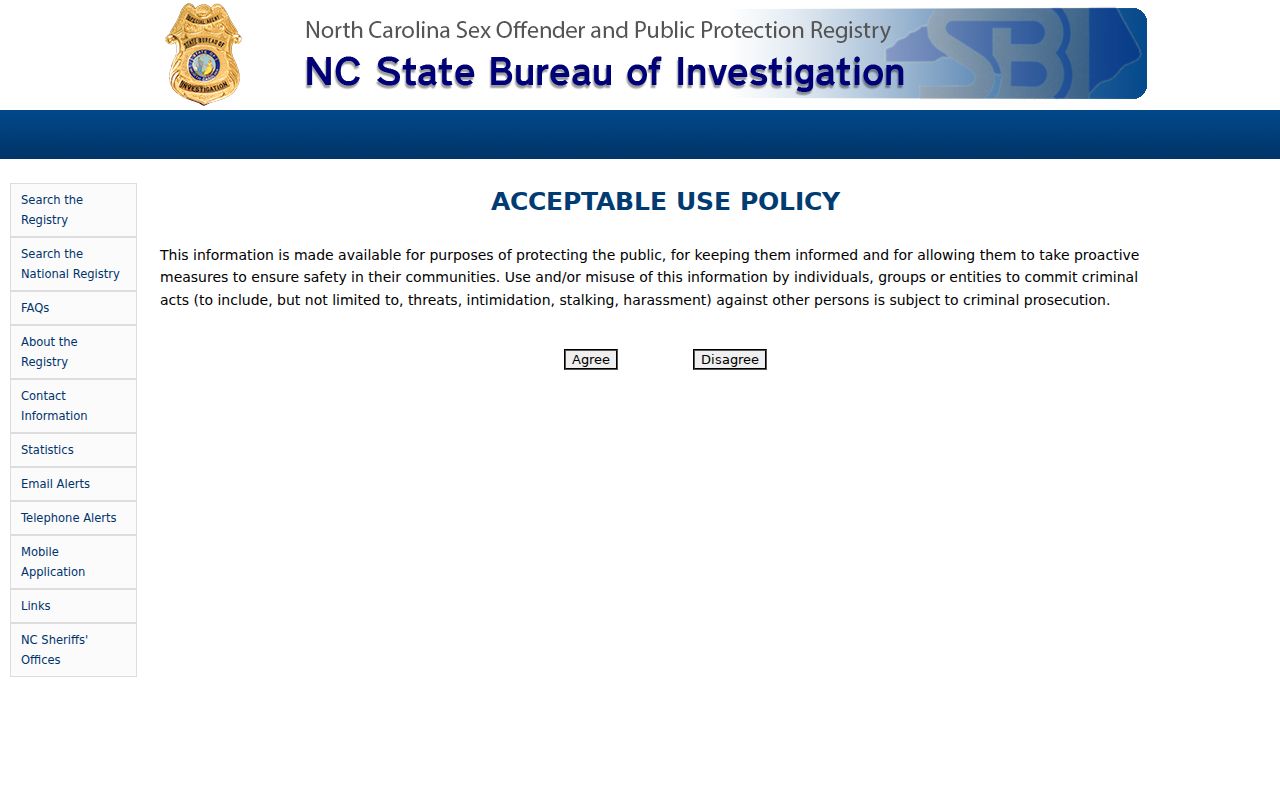
The registry is not a general criminal history. It displays statutory public fields for people who are currently required to register.